
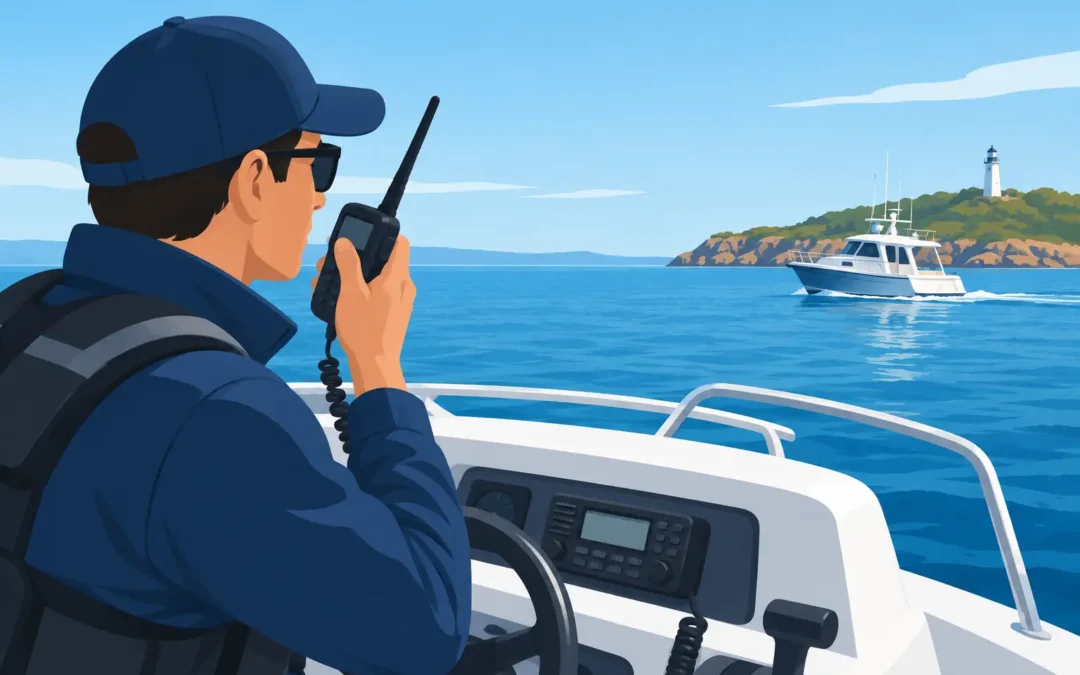
A radio is not just another piece of electronics on the dash. When visibility closes in, the engine stops, or someone is badly injured, it is often the fastest way to bring help to your position. This marine radio operator guide is designed for Australian boaties, deck crew and licence candidates who want to use a VHF or HF marine radio with confidence, not just pass a course.
A good operator sounds calm because they have a simple process to follow. They know which channel to use, what information to give first and when to stop transmitting so another station can respond. That skill matters whether you run a tinny offshore, work on a charter vessel, volunteer with Marine Rescue or are building sea time towards a Coxswain or Master qualification.
Start with the right radio and authority to operate
Before concentrating on radio calls, make sure the equipment and paperwork suit the vessel and area of operation. VHF radio is generally used for short-range communications and is common in coastal waters, harbours and inland areas. HF radio can cover far greater distances and remains relevant for vessels operating well offshore or in remote parts of Australia.
The radio itself must be correctly installed, have a suitable aerial and be programmed appropriately. A powerful set is of little use if the aerial connection is corroded, the power supply is unreliable or the operator does not know how to select the correct channel.
In Australia, qualifications for radio operators and licensing requirements for a vessel’s radio station are separate matters. The requirements can depend on the equipment carried, the service used and where the vessel operates. Recreational and commercial operators should check the current requirements that apply to their vessel rather than assuming a boat licence covers radio operation. For commercial candidates, radio competence may also be examined as part of the practical operational knowledge expected for a maritime certificate.
What every marine radio operator must know
A radio call should be brief, clear and structured. Speak across the microphone rather than directly into it, hold it a short distance from your mouth, press the transmit button, pause for a moment, then speak at a measured pace. Rushing creates clipped words and missed details.
Use plain language where possible. The phonetic alphabet is there for vessel names, call signs and other details that may be misunderstood. Numbers should be spoken clearly and positions should be prepared before you transmit. If you are relying on a GPS position, check that the display is showing the format you intend to report.
Your routine call will usually identify the station you are calling first, followed by your own vessel name. Once contact is established, move to an appropriate working channel if directed. Channel 16 is used for distress, urgency, safety and calling, so it should not be tied up with a long conversation about fishing spots or a late arrival at the ramp.
The three priority messages
The difference between distress, urgency and safety traffic is a common training question because getting it right has real consequences.
A Mayday message is for grave and imminent danger requiring immediate assistance. Examples include a sinking vessel, a serious fire, a collision with immediate risk to the crew, or a life-threatening medical emergency where evacuation is urgently needed. The message starts with “Mayday” repeated three times, followed by the vessel identification, position, nature of distress, assistance required and useful details such as persons on board.
Pan Pan is for an urgent situation that does not yet meet the threshold for a Mayday. A vessel disabled near a shipping channel, a significant medical issue without immediate danger to life, or a vessel overdue in worsening weather may justify an urgency call. Do not downgrade a genuine emergency because you are worried about making a fuss. Conditions can deteriorate quickly, particularly at night or offshore.
Sécurité is used to broadcast important safety information, such as a navigational hazard, severe weather information or a warning affecting vessels in an area. It is not a substitute for a distress call when people need immediate help.
The exact words are worth practising, but do not become so focused on a perfect script that you delay the call. In a real emergency, transmit the vessel name, position, what has happened and what help is required. Those details give responding stations something practical to act on.
A marine radio operator guide to position reporting
Position is often the first point where a stressed operator loses time. Saying “off the point near the island” may be enough for a mate who can see you, but it is not reliable enough for a search response. Give latitude and longitude if available, then support it with a recognisable local reference, course and speed where relevant.
Before leaving the berth or ramp, confirm that everyone who may use the radio can find the position page on the GPS or chartplotter. Check whether it is displaying degrees and decimal minutes, degrees-minutes-seconds or another format. Rescue services can work with different formats, but errors occur when a person reads one format as another.
If electronics fail, fall back on traditional navigation. Your last known position, compass course, speed, time travelled, depth, nearby lights, land features and charted dangers can all help narrow a search area. This is one reason radio competency belongs alongside chartwork and passage planning rather than being treated as an isolated subject.
Radio checks should happen before trouble starts
A radio check is part of a proper pre-departure routine. Switch the set on, confirm the correct channel, check the volume and squelch, inspect the aerial lead where accessible and make a short call to an appropriate station if a check is needed. Avoid repeated open calls on Channel 16 merely to test whether the radio works.
A useful check also includes the people on board. Show a passenger or crew member how to select Channel 16, operate the transmit button and read the vessel’s position. Write the vessel name, call sign where applicable, emergency contacts and basic Mayday wording near the radio in a waterproof format. That is not a replacement for training, but it is sensible preparation when the skipper is injured or occupied managing the vessel.
For vessels fitted with Digital Selective Calling, make sure the Maritime Mobile Service Identity is correctly entered and, where the equipment permits it, that position data is being received. DSC can send a distress alert quickly, but it does not remove the need to make a voice call and maintain a listening watch. The operator still needs to explain the situation and respond to instructions.
Common mistakes that cost candidates and crews
People who have spent years around boats can still be caught out during a radio assessment. Familiarity with local jargon is not the same as being able to deliver a clear priority message under direct questioning.
One common mistake is giving the nature of distress before identifying the vessel and location. Another is forgetting persons on board, especially when the number may change after a person enters the water. Candidates also confuse the purpose of the priority calls, use the wrong channel, or give a position without checking whether the coordinates make sense.
The best fix is question-based practice. Say the full message aloud, not just in your head. Have someone interrupt with a follow-up question: What is your position? What assistance do you require? What radio channel are you on? What will you do if nobody acknowledges your call? Practical repetition exposes the gaps that reading notes can hide.
For commercial crew progressing towards Coxswain or Master tickets, connect radio scenarios to broader command decisions. A disabled vessel near traffic needs radio communication, but it may also require navigation lights, an anchor decision, lookout arrangements, a risk assessment and timely contact with the relevant authorities. Assessors are looking for a safe sequence of actions, not a memorised phrase in isolation.
Build confidence through realistic practice
If there has been a long gap between completing training and sitting an assessment, start small. Revise the phonetic alphabet, priority messages, channel use and position formats. Then practise scenarios that reflect the waters you work in: an engine failure outside a bar crossing, a crew injury on a charter trip, a vessel taking water at night, or a navigation hazard in a busy channel.
Keep the practice honest. If you do not know which information belongs in a Mayday call, identify that weakness and work on it. A short one-on-one session can be particularly useful when you need direct feedback on your wording, radio procedure and response under pressure. True North Marine Training focuses that preparation on the knowledge candidates need to explain clearly in an assessment and apply safely on the water.
The aim is not to sound like a recording. It is to become the person on board who can pause, assess the situation and make the call that gives others the best chance of helping. Practise that before you need it, and the radio becomes what it should be: a dependable safety tool when the pressure is on.