
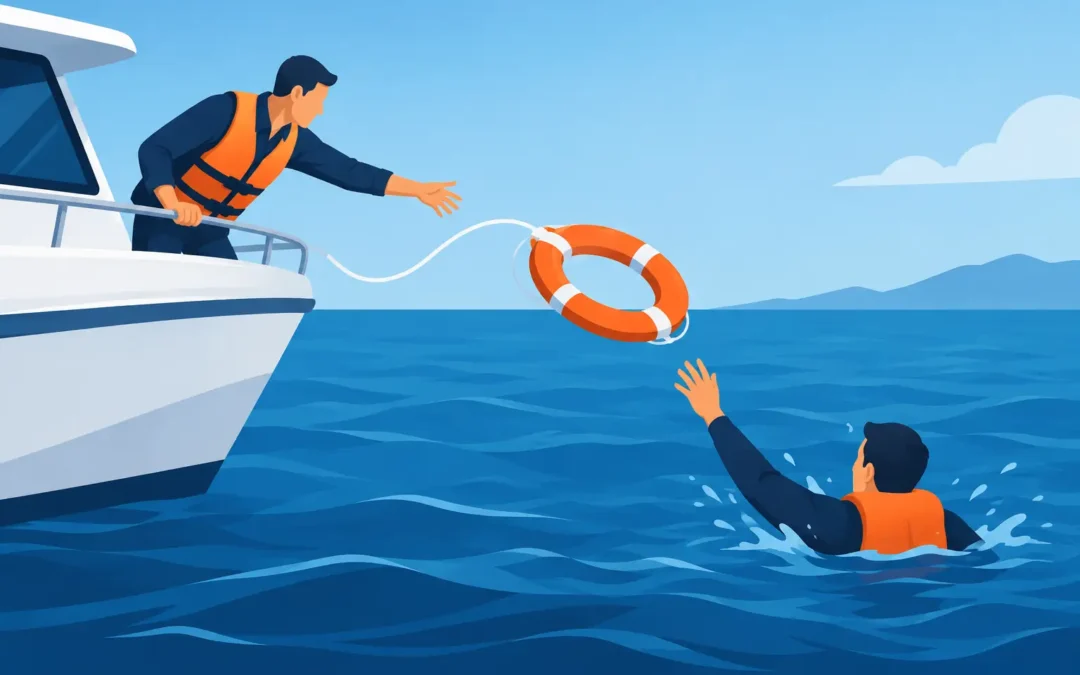
A person in the water can disappear behind a wave, a glare line or a vessel’s quarter in seconds. Knowing how to recover a person overboard is not about performing a perfect textbook manoeuvre. It is about taking immediate, disciplined action, keeping the casualty in sight and bringing them alongside without creating a second emergency.
For Coxswain and Master candidates, person overboard recovery is also a common oral assessment topic because it tests much more than boat handling. An assessor may be looking at your command presence, collision-risk awareness, radio decisions, understanding of local conditions and ability to manage the crew under pressure.
The first actions after a person goes overboard
The first priority is to alert everyone onboard. Shout, “Person overboard”, clearly and loudly. The person who saw them fall should keep pointing continuously at the casualty. That sounds basic, but it is one of the most effective actions available. A pointing crew member gives the helmsman a reference even when visibility is poor or the casualty is difficult to see.
Immediately throw a lifebuoy, horseshoe buoy, flotation aid or other suitable marker towards the person. Do not delay because you think they are a strong swimmer. A flotation device buys time, helps them conserve energy and gives you something easier to spot in choppy conditions. If fitted, activate the vessel’s MOB function on the GPS or plotter to mark the position.
The master should take control of the response. Slow the vessel, assess the risk from the propeller and decide how to manoeuvre safely. On a small powered vessel, putting the engine into neutral early can be critical if the casualty is close astern or alongside. Reversing towards a person in the water is generally a poor option because it increases propeller risk and reduces your view of them.
At the same time, organise the crew. One person maintains a constant visual watch, another prepares recovery gear, and another may make the radio call if required. On a vessel with limited crew, priorities still apply: keep sight of the casualty, control the vessel and recover them safely.
How to recover a person overboard: the approach
There is no single manoeuvre that suits every vessel and every condition. A rescue boat, workboat, fishing vessel, ferry and recreational runabout all handle differently. Wind, tide, sea state, freeboard, vessel speed and the casualty’s condition will affect the safest approach.
The general principle is to approach slowly from downwind or down-current, so the vessel drifts away from the casualty rather than onto them. This gives the helmsman better control at low speed and reduces the chance of the hull, propeller or gear striking the person.
Keep the casualty on the side where the helmsman and recovery crew can see them clearly. On many vessels, this means making a controlled approach with the casualty on the lee side, where there is some shelter from wind and sea. Avoid approaching at speed. It may feel as though speed is the answer, but excessive way makes the final recovery much harder and more dangerous.
As you close the casualty, place the engine in neutral when appropriate and maintain only the control needed to keep the vessel safely positioned. If conditions are difficult, it may be safer to make another approach than force an unstable first attempt. Good seamanship is not about showing off with a tight manoeuvre. It is about recognising when conditions do not allow a safe recovery.
A useful assessment answer explains your reasoning. Rather than simply saying, “I would come alongside,” explain that you would approach slowly from downwind or down-current, retain visual contact, protect the casualty from propeller danger and use the lee side of the vessel where practical.
Use recovery equipment before asking the casualty to climb
Throwing a lifebuoy is only the first stage. Recovery equipment must be ready before the vessel reaches the casualty. Depending on the vessel, this could include a heaving line, rescue sling, scramble net, boarding ladder, Jason’s cradle, lifting strop or purpose-built recovery platform.
A conscious person who can assist may be able to hold a line, place a sling around themselves or climb a ladder. Do not assume they can do this easily. Cold water, panic, injury and fatigue can quickly remove a person’s ability to grip or climb, even if they appeared capable moments earlier.
If the casualty is unconscious, injured or unable to help, the recovery becomes more complex. Do not rely on an improvised lift by their arms or clothing. This can cause further injury or result in them slipping back into the water. Use the vessel’s planned recovery method and suitable lifting equipment where available. Consider the freeboard and the crew’s physical capability before committing to a method.
If you suspect a spinal injury, keep movement as controlled as the circumstances allow. However, do not let concern about perfect immobilisation delay recovery from cold water, drowning risk or immediate danger. In a real emergency, priorities must be balanced against the conditions in front of you.
Radio calls and emergency support
A person overboard may require a distress call, urgency call or a local emergency notification, depending on the situation. If the casualty cannot be recovered promptly, is missing from sight, is injured, or the vessel needs immediate assistance, escalate early.
For grave and imminent danger, a MAYDAY call may be appropriate. For an urgent situation that is serious but not immediately life-threatening, PAN PAN may be more suitable. In coastal waters, contact the relevant marine rescue service or emergency authority on the appropriate VHF channel and provide a clear report: vessel name, position, number of people in the water, condition of the casualty, actions being taken and assistance required.
Do not wait until the situation has become unmanageable. Early communication brings more eyes, more vessels and better coordination to the search. If you are conducting a search after losing sight of the person, mark the last known position, consider wind and tide set, and begin a structured search pattern suitable for your vessel and the available area.
Once the casualty is back onboard
Recovery is not the end of the emergency. Move the casualty away from the vessel’s edge, assess their responsiveness and check airway, breathing and circulation. If they are not breathing normally, commence CPR and arrange urgent medical assistance.
A person who has been in the water may be cold even on a warm Australian day. Remove wet clothing if practical, protect them from wind, apply warm dry coverings and handle them gently. Do not give alcohol. Monitor them closely, because breathing problems associated with water inhalation can develop after the person appears to have recovered.
Record the incident when the immediate situation is under control. Note the time, position, weather, actions taken, communications made and treatment provided. For commercial operations, follow your vessel’s safety management procedures and reporting requirements. A proper debrief also matters. Ask what worked, what equipment was difficult to access and whether crew roles were clear.
What assessors want to hear
In an AMSA-style oral assessment, a person overboard question often starts simply: “What would you do?” Candidates can lose marks by giving a rushed sequence of memorised words without showing command of the situation.
A stronger answer is calm and practical. State that you would raise the alarm, maintain a dedicated lookout, deploy flotation and mark the position. Then explain how you would manoeuvre with propeller safety, wind and current in mind. Finish with recovery equipment, first aid, radio escalation and reporting.
Be ready for follow-up questions. What if the casualty is unconscious? What if you lose sight of them? What if you are operating alone? What if there is a strong current, a high freeboard or no suitable boarding point? There is rarely a magic answer, but there should always be a considered risk-based response.
Practise the procedure on the vessel you expect to operate. Walk through where flotation aids are stored, who handles the radio, how the engine is controlled during recovery and how an incapacitated person would actually be lifted aboard. Confidence in this emergency does not come from memorising a paragraph. It comes from understanding your vessel, rehearsing the actions and being ready to lead when every second counts.
The best time to solve a person overboard problem is before anyone enters the water. Make the plan familiar, make the equipment accessible, and give your crew a calm example to follow.