
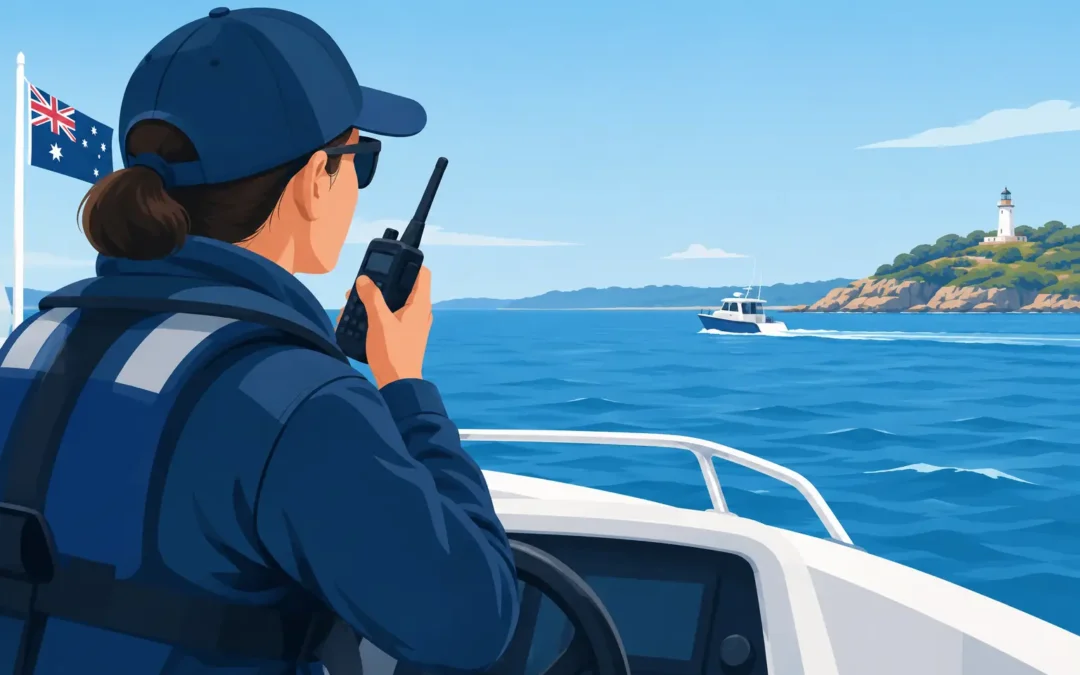
A radio call made early and clearly can change the outcome of an incident at sea. That is why the question, do coxswains need radio licences, deserves more than a quick yes or no. A Coxswain Certificate of Competency and a marine radio operator qualification are separate things, but they often sit side by side in real vessel operations.
For many Australian commercial coxswains, holding an appropriate marine radio certificate is either required by the job, expected by the operator, or simply essential to performing safely when communications matter. The exact answer depends on the radio equipment fitted, the waters you operate in, the vessel’s procedures and the duties you are expected to carry out.
Do Coxswains Need Radio Licences?
A Coxswain certificate does not automatically give you a marine radio operator qualification. Your AMSA certificate demonstrates competency to perform duties within the limits of that certificate. It does not replace the separate qualifications needed to operate particular marine radio services.
In everyday conversation, people often say “radio licence” when they mean a marine radio operator certificate. It helps to separate two different requirements:
- An operator certificate shows that an individual has been trained and assessed to use marine radio equipment correctly.
- A vessel or station authority relates to the radio installation, call sign, identification details and licensing arrangements for the vessel itself.
The operator certificate is the part most relevant to a coxswain. In Australia, the Australian Communications and Media Authority framework covers marine radio qualifications. The Short Range Operator Certificate of Proficiency, commonly called the SROCP, is generally the relevant qualification for operators using VHF marine radio and associated digital selective calling equipment. The Long Range Operator Certificate of Proficiency, or LROCP, is relevant where longer-range HF communications are part of the operation.
If you are the person making routine calls, monitoring distress traffic, sending a distress alert or coordinating communications during an emergency, you should not assume your Coxswain qualification alone covers that role.
Why the Answer Depends on Your Vessel and Duties
A coxswain may work on a small fishing vessel, tour boat, workboat, tender, landing craft, ferry, charter vessel or marine rescue vessel. Communications arrangements vary considerably between those operations.
A vessel operating close to shore with a fixed or handheld VHF may only need short-range radio capability. A vessel working farther offshore may rely on HF, satellite equipment or other systems alongside VHF. Some operators allocate radio duties to the master or coxswain. Others have a crew member specifically responsible for communications. On a small vessel, however, the coxswain is commonly the person who needs to act immediately.
Your employer’s safety management system may specify who is authorised to operate each communication system. Survey requirements, operational area, client requirements and company procedures can also set a higher standard than the bare minimum. For example, a tourism operator may want every coxswain rostered on a vessel to hold an SROCP, even where another suitably qualified person is also on board.
This is not unnecessary paperwork. During an engine-room fire, medical evacuation, grounding or search operation, there is no time to work out which channel to use, how to structure a Mayday call or what information the responding station needs first.
What Radio Competence Looks Like in Practice
Radio training is not just about pressing the transmit button and saying your vessel name. A competent operator needs to understand the discipline that keeps distress and safety communications clear when several vessels are listening.
For a coxswain, practical radio competence includes knowing how to make a routine call without blocking a working channel, maintain an effective listening watch, use correct distress, urgency and safety procedures, and communicate accurate position information. You should also understand the role of designated channels, digital selective calling alerts, radio checks, signal strength and the limitations of your equipment.
A good radio operator can give concise operational information under pressure. That means being ready to state the vessel’s identity, position, nature of distress, assistance required, persons on board and any immediate hazards. It also means knowing when to stop transmitting and listen for instructions.
This knowledge connects directly with the broader responsibilities of a coxswain. Safe navigation, emergency response, watchkeeping and leadership all depend on clear communication. A radio is not a separate box on a checklist. It is part of how you manage risk on the water.
Coxswain Assessments and Radio Knowledge
Candidates preparing for a Coxswain assessment can be caught out by assuming radio procedures are outside the scope of their preparation. Even if a separate radio certificate is required for the equipment you use, communications knowledge remains operationally relevant to Coxswain duties.
An AMSA assessor may explore how you would respond to an emergency, call for assistance, communicate with other vessels or report a developing hazard. You may need to explain the actions you would take following a collision, fire, person overboard situation, flooding incident or medical emergency. Communications will usually form part of a sound response.
The strongest answers are practical and ordered. Rather than saying, “I would call for help”, explain what you would do first: assess immediate danger, raise the appropriate alarm, send the correct distress or urgency message where required, provide position and vessel details, maintain a listening watch, and continue to manage the emergency on board.
That approach shows the assessor that you understand both the technical procedure and the command responsibility behind it.
Choosing the Right Marine Radio Qualification
If your work involves standard VHF operations, the SROCP is commonly the starting point. It covers short-range marine radio use and the procedures most coxswains will encounter in near-coastal and inshore work.
Where your operation uses MF/HF radio or requires long-range communications, you may need an LROCP instead. Do not choose based only on what another person in the industry holds. Check the actual equipment on the vessel, the operating area and your employer’s requirements.
It is also worth checking whether the radio setup includes digital selective calling. DSC can rapidly send identifying information and a distress alert, but it is only useful when the operator understands its purpose, the correct procedure and the vessel’s programmed details. Treating it as a substitute for a proper voice distress message can create confusion rather than help.
For recreational operators moving into commercial work, this is often a gap. You may be comfortable talking on a VHF, but commercial operations demand reliable procedure, accurate logs where required and a professional understanding of your responsibilities.
A Sensible Checklist Before You Take Command
Before accepting a coxswain role, confirm the vessel’s communication arrangements with the owner, master or operator. Ask what radios are fitted, which qualifications are expected, who is responsible for routine calls and what emergency procedures apply.
You should also physically inspect the equipment. Know the location of fixed and handheld radios, microphones, spare batteries, emergency instructions and current radio reference material. Confirm that you can identify the vessel’s call sign or other required identification, find the appropriate channels and make a distress call without hunting through a folder.
Finally, practise. Read emergency scenarios aloud and work through the sequence of actions. A calm, well-structured call is far easier to make when the words and priorities are already familiar.
Build Confidence Before Your Assessment
If you have had a long gap between your Coxswain course and final assessment, radio procedures can be one of those areas that feels familiar until someone asks you to explain it under direct questioning. That is normal, and it is fixable with targeted revision.
At True North Marine Training, one-on-one assessment preparation can help candidates turn broad knowledge into clear operational answers. The aim is not to memorise a script. It is to understand what you would genuinely do on board, explain it confidently and recognise where a separate marine radio qualification is needed for your intended work.
Before your next trip or assessment, check your vessel’s requirements, confirm your radio qualification is appropriate and spend time practising the calls you hope never to make. That preparation is good for your certificate, but more importantly, it is good seamanship.