
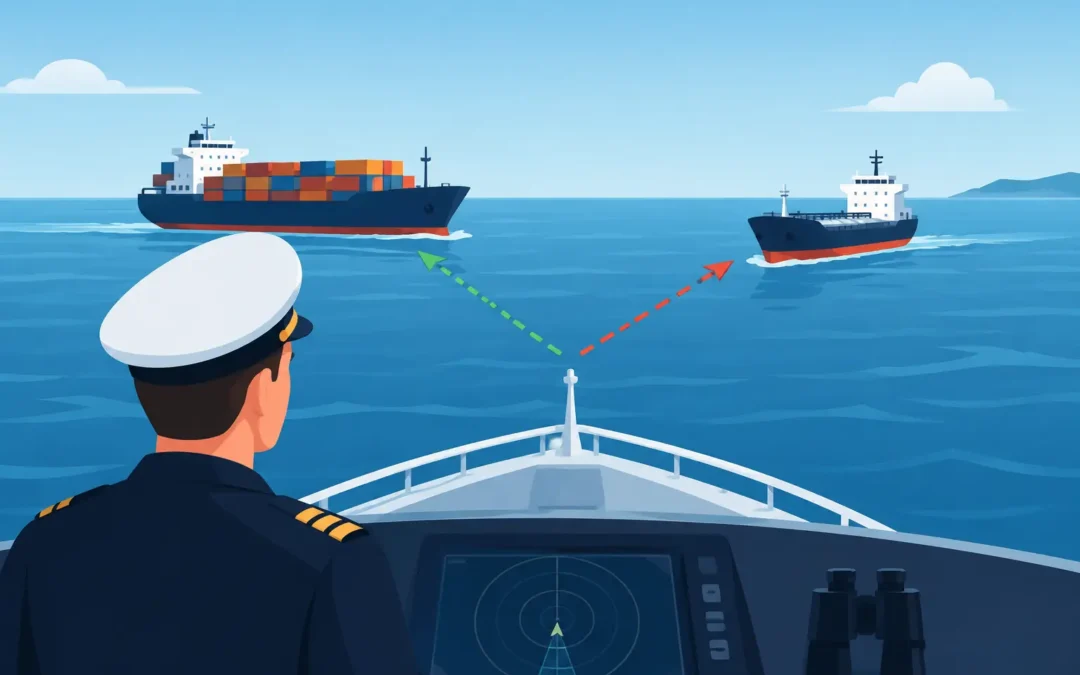
A bar can look manageable from inside the river and completely different once the vessel reaches the break. This bar crossing example is designed to show the thinking an experienced skipper should apply before committing to a crossing. It is not a fixed recipe. Every bar changes with tide, swell direction, river flow, recent weather and local channel conditions.
For Coxswain and Master candidates, this is also the standard of practical judgement an assessor wants to hear. Knowing the theory matters, but the stronger answer explains what you would observe, what controls you would put in place and when you would decide conditions are outside the vessel’s or crew’s capability.
Why a bar crossing is never routine
A coastal bar is the shallow area where a river or estuary meets the sea. Swell steepens as it reaches shallow water, often creating breaking waves, strong currents and an unpredictable channel. The visible break is only part of the risk. Sandbanks can shift, leads may change, and a safe-looking gap can close quickly during a larger set.
The most dangerous conditions often occur when an outgoing river current meets incoming swell. This can make waves stand up sharply and break across the channel. Wind against tide can add to the problem. A crossing that was suitable earlier in the day may no longer be suitable after a tide change or a freshening breeze.
A competent skipper does not treat local knowledge as optional. Before a crossing, check the current local bar advice, weather forecast, swell forecast, tide information and any notices affecting navigation. If you are unfamiliar with the bar, speak with a local authority or experienced local operator where possible. Conditions observed at the entrance always take priority over a plan made at home.
Bar crossing example: assessing the situation
Imagine you are the master of a 11-metre commercial vessel returning to an estuary after a fishing trip offshore. There are two crew and six passengers on board. The forecast is for a 1.5-metre easterly swell, light south-easterly wind and a falling tide. You have checked the published bar advice before departure, but you can now see a line of white water across the entrance.
All crew and passengers are on the aft deck with lifejackets on as regulations require. Only the master is permitted to be in the cabin. Commercial masters also know that regulations for Class 1 and 2 vessels carrying passengers are prohibit crossing coastal bars at night, when seas exceed 2 metres and winds exceed 20 knots.
You do not head straight in. From a safe position offshore, well clear of the breaking area, you slow down and observe the bar. You watch for a full set cycle rather than making a decision after one or two waves. Larger sets often arrive after a quieter period, and they may break further out than the smaller waves.
You identify the marked channel and compare it with the visible line of breakers. You look for the deepest, clearest water, but you do not assume the channel is safe simply because marks are in place. You consider the falling tide, which may be increasing the outflow and steepening the sea. You also assess whether the vessel has enough power to maintain steerage and make a positive run through the channel if required.
At this point, your decision is not simply, “Can I get in?” The better questions are: can the vessel cross with an appropriate safety margin, can the crew carry out their duties safely, and what will I do if a set closes the channel or the engine loses power? If the answer is uncertain, the prudent option is to remain offshore, seek advice, or divert to a safer port.
That is not a failure of command. Turning back before conditions force your hand is sound seamanship.
Preparing the vessel and crew
If the bar appears suitable for the vessel and you decide to proceed, preparation happens before the approach. Everyone on board should be wearing an appropriate lifejacket, secured correctly. Loose gear should be stowed, hatches and doors secured as appropriate, and bilge pumps checked. Weight should be kept low and centred, with crew seated or positioned where they can hold on safely without affecting the vessel’s trim.
The master should brief the crew in plain language. Explain the intended track, who will keep watch, where people must remain, and what to do if the vessel is struck by a wave or broaches. There should be no uncertainty about avoiding sudden movement, opening hatches unnecessarily or distracting the person at the helm.
Communications are equally important. Monitor the relevant VHF channel and make the required local call if the bar has a reporting procedure. Have a distress call ready in your mind before you need it. Ensure your radio is operating, your position is known, and emergency equipment is accessible. For a commercial operation, this preparation should align with the vessel’s safety management procedures and the equipment carried.
Making the approach
From offshore, time the approach to follow behind a larger set rather than trying to overtake or meet breaking waves at random. Maintain enough speed for positive steering, but avoid excessive speed that could launch the vessel off a wave, bury the bow or remove your ability to adjust course.
On an inbound crossing, keep the vessel aligned with the safest available channel and generally meet the waves as squarely as conditions allow. A wave on the quarter can push the stern sideways and lead to a broach. Constant small helm corrections are usually safer than large, late movements. Look ahead through the pattern of waves, not only at the next crest directly in front of the bow.
As the vessel climbs a wave, ease power if necessary to prevent becoming airborne. As it comes down the back, apply power smoothly to retain control and avoid being caught by the following sea. The correct throttle setting depends on the vessel, load, sea state and wave pattern. There is no single speed that is right for every bar.
If a breaking wave develops across your intended track, do not make a panicked turn inside the break. Maintain control, reassess the available water and make a deliberate decision. Sometimes the safest action is to withdraw offshore and wait for another opportunity. A skipper who abandons an approach early has more sea room and more choices than one who presses on into the most dangerous water.
What assessors want to hear
In an oral assessment, a question about crossing a bar is rarely testing whether you can repeat a short checklist. It tests your command judgement. An assessor may ask about regulatory requirements for bar crossing, bar endorsements on marine qualifications, weather, tide, swell, crew briefing, lifejackets, communications, stability, engine readiness and risk assessing the situation as well as the decision to abort the crossing.
A strong response connects each control to the risk. For example, you wear lifejackets because a capsize or person overboard may occur suddenly. You secure loose equipment because it can injure crew or shift vessel stability. You observe several sets because the first gap may not represent the largest waves. You keep power in reserve because losing steerage in breaking water can quickly become critical.
Candidates sometimes feel pressure to give a confident answer that ends with a successful crossing. Professional confidence is different. It means being prepared to say that the crossing is unsuitable, even when there is a schedule to meet, passengers waiting or a long run to an alternate harbour.
Build judgement before the assessment
Bar crossing questions can expose gaps in practical knowledge, especially if it has been a while since you last worked on the water or completed your course. The useful preparation is to practise talking through realistic scenarios aloud. Explain what you would check, what you would see, how you would brief the crew and what conditions would make you turn back.
At True North Marine Training (https://maritimetutor.com), individual assessment tutoring can help candidates turn that knowledge into clear, operational answers under questioning. The aim is not to memorise a script. It is to build the calm, safety-focused judgement that carries into both the assessment room and the wheelhouse.
The bar will always have the final say. Give it proper time, keep a margin for error, and make the conservative call early enough that everyone on board gets home safely.