
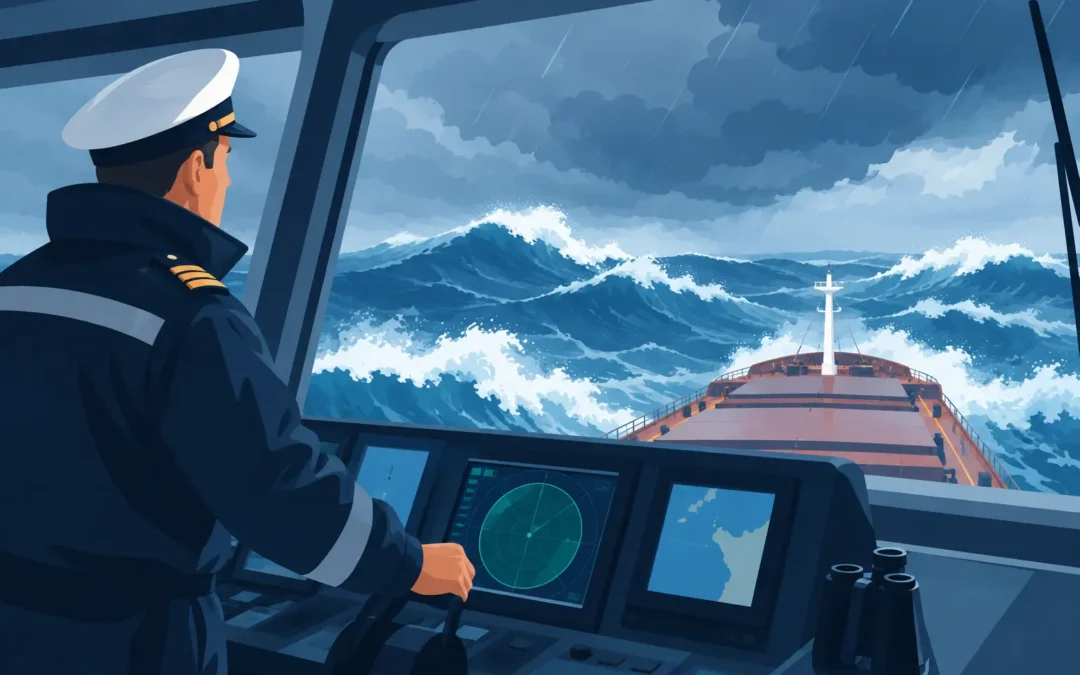
A forecast can look manageable at the berth and become a different job entirely once you clear the heads. Heavy weather seamanship is not about proving you can drive a vessel through rough water. It is about recognising when the risk is increasing, preparing early, operating within the vessel’s limits and making the safe call before the situation becomes an emergency.
For Coxswain and Master candidates, this is also a common oral assessment area. An AMSA assessor is not simply looking for a definition of heavy weather. They want to hear how you would apply sound judgement to the vessel, crew, cargo, route and conditions in front of you. The best answers are practical, structured and clearly linked to safe operation.
Heavy Weather Seamanship Starts Before Departure
The safest heavy-weather decision is often made before lines are slipped. Check the latest forecast, but do not stop at the headline wind strength. Look at wind direction, swell height and period, tide, current, bar conditions, visibility and the expected trend over the full passage. A moderate wind against a strong tidal stream can produce short, steep seas that are far more uncomfortable and dangerous than the wind speed suggests.
Local knowledge matters as well. A protected bay may offer little warning of conditions offshore. A bar crossing, harbour entrance, shallow bank or headland can change the sea state quickly. On the Australian coast, a vessel running north or south along an exposed shoreline may have few genuine shelter options once conditions build. Know your alternates, fuel requirements and the point at which turning back remains the sensible option.
Preparation means securing the vessel for the conditions expected, not the conditions you hope for. Check weathertight doors, hatches, vents and freeing ports. Secure loose equipment, deck gear, machinery spares and galley items. Confirm bilge alarms and pumps are working, and make sure emergency gear is accessible rather than buried behind cargo or stores.
Crew preparation deserves the same attention. Brief people on lifejackets, communications, watch arrangements, safe movement on deck and what to do if someone is injured or goes overboard. In rough weather, tired or inexperienced crew can become part of the problem quickly. A clear briefing reduces confusion when noise, motion and spray make normal communication difficult.
Assessing the Vessel, Not Just the Weather
There is no single wind speed at which every vessel should stay alongside. A 10-metre workboat, a loaded tourism vessel and a lightly loaded fishing vessel can behave very differently in the same conditions. Freeboard, stability, loading, power, hull form, fuel state and the experience of the person at the helm all affect the safe operating margin.
Loading is especially important. High loads raise the centre of gravity and can reduce stability. Free surface in partially filled tanks can make a vessel more tender. Water on deck, unsecured cargo or gear shifting to one side may create an immediate stability problem. Candidates preparing for Master qualifications should be able to explain these effects in plain language, then describe the controls they would use.
A vessel that is rolling heavily is not necessarily unsafe, but excessive roll may indicate that the chosen heading or speed needs changing. Slamming can damage structure, loosen equipment and fatigue the crew. Taking seas on the quarter can create steering difficulties and increase the risk of broaching, particularly if speed is too high or the vessel is following a steep sea. The answer is not always to slow down. At times, reducing speed too much can take away steerage or leave the vessel vulnerable to the sea. It depends on the vessel and the conditions, which is why skippers need to continually assess the result of every adjustment.
Handling the Vessel in Heavy Conditions
A good helm response is controlled rather than abrupt. Avoid large, aggressive alterations of course unless immediate danger demands it. Use the sea room available and select a heading that reduces the vessel’s uncomfortable or unsafe motions. This may mean taking the sea on the bow quarter, altering course to avoid a particularly exposed section of coast, or delaying entry into a harbour until conditions and tide improve.
Speed should be matched to sea state. Excessive speed into head seas can cause pounding, green water on deck and damage. In following seas, excessive speed can cause the vessel to surf, lose directional control or broach. Keep enough way on to maintain control, but accept that the schedule may need to change. Commercial pressure, passenger expectations or a desire to get home are never good reasons to press on beyond a safe margin.
Watchkeeping must tighten as conditions worsen. Visibility may reduce in rain and spray, navigation marks can be difficult to identify, and electronic equipment may be harder to monitor while the vessel is moving heavily. Maintain a proper lookout by sight, hearing and all available means. Radar, AIS, GPS and sounders are valuable tools, but they do not replace an alert person looking outside.
In an assessment, explain how you would manage fatigue. Heavy-weather driving requires concentration, and the physical strain can build quickly. Where manning permits, rotate duties, provide a proper rest period and avoid leaving one person alone to manage the helm, navigation, radio and lookout for too long. A tired skipper is more likely to make a poor course or speed decision at exactly the wrong time.
Protecting People on Board
Many heavy-weather injuries happen inside the vessel or while crew are trying to secure something that should have been secured earlier. Limit movement on deck. If work outside is unavoidable, assess whether it can wait, ensure appropriate personal protective equipment is worn, use lifelines where fitted and maintain communication with the helm.
Passengers need calm, direct instructions. Tell them where to sit, what to hold, where not to move and when to wear a lifejacket. Avoid creating alarm, but do not downplay the conditions. A well-informed passenger is more likely to follow directions and less likely to become injured.
If someone is seasick, injured or distressed, factor that into your plan. A person who cannot safely move about or assist in an emergency changes the capability of the vessel. Consider diverting to shelter, calling for advice or requesting assistance early rather than waiting for the problem to compound.
When Conditions Deteriorate Further
Heavy weather can become an emergency through a chain of small failures: water ingress, engine trouble, steering loss, an injured crew member or a navigational error near a lee shore. The practical response is to stabilise the immediate problem, communicate early and preserve options.
If taking water, identify the source if it is safe to do so, start pumps, reduce water ingress and prepare distress communications if the situation is not under control. If machinery performance is deteriorating, do not leave the decision to seek shelter until propulsion has failed completely. A vessel with reduced power near a coast, bar or shipping channel has far fewer safe choices.
Use your marine radio properly. Make an urgency or distress call when warranted, give your position, nature of distress, assistance required and the number of people on board. Keep a listening watch and update rescue authorities as the situation changes. Marine Rescue and other response agencies can provide valuable local support, but the skipper remains responsible for clear, early communication and sensible decision-making.
Anchoring may be an option in protected water, but it is not a default answer to rough conditions. Consider depth, holding ground, room to swing, proximity to hazards, anchor gear condition and whether the vessel can safely recover the anchor later. Anchoring in an exposed area with a lee shore nearby may simply delay the emergency.
How to Prepare for an AMSA Assessment
Heavy weather questions are rarely difficult because of obscure theory. They are difficult when candidates try to give a memorised answer without showing decision-making. An assessor may ask what you would do if the forecast worsened, if the vessel began taking green water, if cargo shifted, or if you lost steering in a following sea. Your response should show priorities: protect life, maintain control, assess the vessel, communicate and seek shelter or assistance when required.
Practise talking through realistic scenarios out loud. Describe what information you would gather, what immediate actions you would take and why. Be prepared to connect heavy weather operations with stability, emergency procedures, radio communications, collision avoidance, passage planning and crew management. These subjects overlap in real operations, and they overlap in a competent oral assessment answer.
At True North Marine Training, targeted one-on-one revision can help candidates turn broad experience into clear, assessment-ready answers. The aim is not to recite a script. It is to build the confidence to explain your judgement calmly when the questions move beyond the textbook.
A capable skipper does not wait for heavy weather to demonstrate seamanship. They prepare early, leave room for a change of plan and make the conservative decision while there is still time to make it safely.