
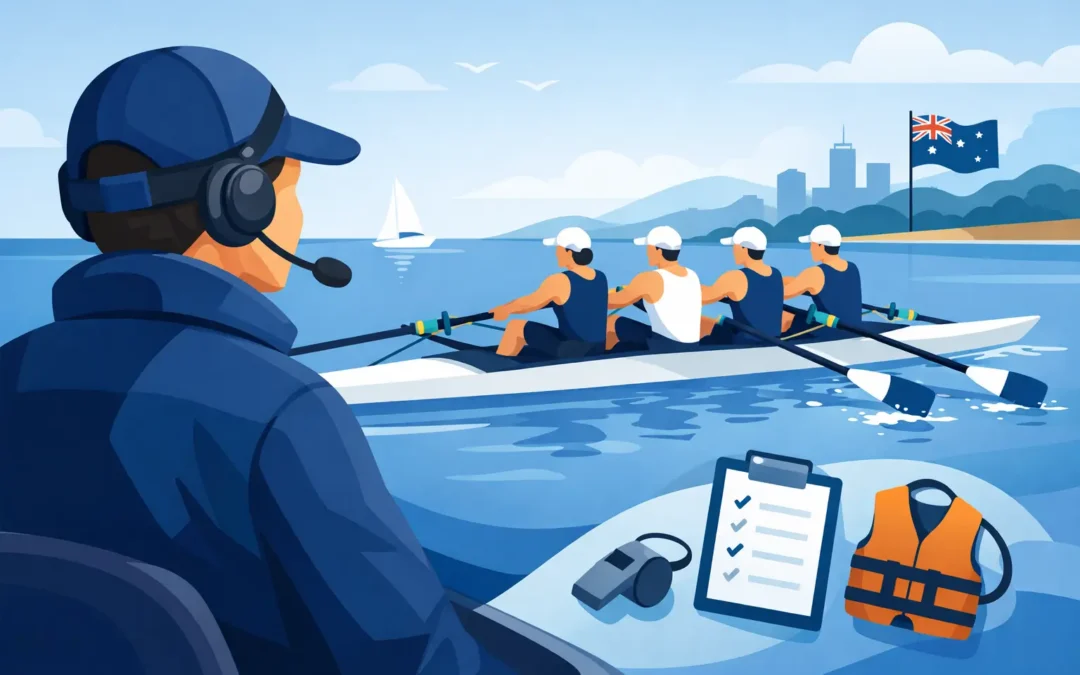
A Coxswain NC1 qualification can be the step that moves you from working on deck to taking responsibility at the helm. It also carries real accountability. AMSA assessors need to see that you can make safe decisions, handle a vessel competently and explain why you would act a certain way when conditions change. That is why understanding the Coxswain NC1 requirements early can save a great deal of stress when it is time for your final assessment.
This is not simply a matter of completing a course and waiting for a certificate to arrive. You need the right training, sea service, medical evidence and practical competence. More importantly, you need to be ready to demonstrate the knowledge behind the job.
What a Coxswain NC1 certificate is designed for
Coxswain Grade 1 Near Coastal is a nationally recognised certificate of competency for people operating smaller commercial vessels in the near coastal sector. It is commonly relevant to tourism operators, commercial fishing crews, workboats, tenders, marine rescue volunteers moving into commercial work, aquaculture operators and personnel on local freight or service vessels.
The precise operational limits, vessel size, propulsion limits and permitted area of operation are set by the current AMSA framework and the conditions on the certificate. Before accepting a position or planning a business operation, check that the certificate scope matches the vessel and work you intend to undertake. A qualification that is suitable for a small charter vessel operating locally may not cover every role on a larger, more complex or more remote operation.
The key point is that the certificate is about command. You are expected to plan the voyage, manage people, operate safely, respond to emergencies and make the right call when the plan is no longer safe.
Coxswain NC1 requirements: the main eligibility pathway
AMSA requirements can change, so always confirm the current eligibility checklist before lodging an application. In broad terms, a Coxswain NC1 candidate will need to meet the following requirements:
- meet the minimum age requirement for the certificate;
- complete an AMSA-approved Coxswain Grade 1 Near Coastal training course through an approved provider;
- complete the required qualifying sea service and maintain acceptable evidence of that service;
- meet AMSA medical fitness, eyesight and colour-vision requirements;
- hold the required current first-aid qualification;
- complete the required practical training records or task book where applicable; and
- successfully complete the required final AMSA approved assessment with an AMSA-approved training provider.
These are connected, not separate boxes to tick at the last minute. Your course develops the underpinning skills. Sea service gives you time in a real operating environment. Your medical evidence confirms you can safely perform the role. The final assessment tests whether you can bring it all together.
Approved training is the foundation, not the finish line
An approved course gives you the formal units and practical training required for the qualification. It should cover the operational work a coxswain needs to understand, including vessel handling, navigation, collision regulations, weather, stability, emergency procedures, communications and basic engineering knowledge.
Candidates sometimes assume that finishing their course means they are automatically ready for the AMSA assessment. That depends on how recently you completed the training, how much practical exposure you have had since then and whether you have kept revising. A six or twelve-month gap while collecting sea service can leave even capable operators rusty on navigation calculations, lights and shapes, stability terminology or emergency response priorities.
Treat your course completion as the start of assessment preparation, not the end of it.
Qualifying sea service must be recorded properly
Sea service is one of the most common areas of confusion. It is not enough to say that you have spent plenty of time on boats. AMSA requires qualifying sea service that meets its current conditions, including the relevant vessel type, period of service and supporting records.
Keep your evidence organised from day one. Depending on your employment arrangement and the vessel, this may include sea service letters, vessel details, dates, your duties, signatures from the master or owner and records that support the vessel’s commercial operation. If you work casually, across several vessels or in a family business, do not leave the paperwork until application time. Reconstructing dates and duties months later is frustrating and can delay your progress.
Your sea service should also be used as learning time. Ask to take part in passage planning, pre-start checks, berth work, lookout duties, radio communications and emergency drills. Time aboard matters, but useful experience makes the oral and practical assessment far less intimidating.
Medical, eyesight and first aid are safety requirements
A coxswain may need to identify a navigation light at night, detect a marker in poor visibility, read a chart accurately, hear an alarm or give first aid before outside help arrives. AMSA’s medical, eyesight and colour-vision requirements reflect those operational realities.
Do not assume an ordinary driver’s licence eyesight test or a previous employer medical will meet the requirement. Arrange the appropriate examination early and use the current AMSA guidance to ensure the certificate is completed correctly. If you have a known eyesight, colour-vision, hearing or medical condition, deal with it before you book an assessment date.
Your first-aid certificate also needs to be current and at the required level. Check expiry dates carefully. A lapsed first-aid qualification can hold up an otherwise complete application.
What the AMSA-approved final assessment is really testing
The final assessment is not intended to catch you out with obscure theory. It is designed to establish whether you can safely perform the duties of a Coxswain NC1. Assessors will often use questions based on realistic operating situations, then ask follow-up questions to check your reasoning.
For example, you may be asked about a planned voyage and then questioned on what changes if the forecast deteriorates, a crew member becomes unwell, the engine alarm sounds or visibility drops. A short answer such as “I would head home” is rarely enough. You need to explain your immediate actions, the hazards, the communications required, the options available and the factors that would guide your decision.
Expect to be comfortable discussing these areas:
- collision regulations, lights, shapes, sound signals and lookout obligations;
- chartwork, position fixing, tides, course-to-steer and basic passage planning;
- weather information, local conditions and decision-making limits;
- vessel stability, free surface effect, loading, trim and watertight integrity;
- emergency actions for fire, flooding, grounding, person overboard and abandoning vessel;
- radio procedure, distress and urgency communications, and marine safety information;
- machinery checks, steering, fuel systems, battery safety and fault response; and
- crew, passenger and workplace safety responsibilities.
The exact questioning will vary according to the AMSA – approved training provider assessor and your operational context. A candidate from a fishing vessel may be asked differently from someone working on a tourism boat, but the standard remains the same: safe, practical command knowledge.
Prepare for the questions behind the questions
Candidates who struggle in an oral assessment are often not lacking experience. They have simply not practised explaining their knowledge under pressure. They know what they would do, but the answer comes out incomplete, out of order or without the safety reasoning an assessor needs to hear.
A useful way to practise is to structure every emergency answer around immediate safety, communications, control of the situation, further action and reporting. For a flooding scenario, for instance, start with protecting people and identifying the source. Then explain pumps, damage control, distress communications if required, navigation to a safe location and the decision to seek assistance or abandon vessel. The details will vary, but a calm, logical sequence shows command thinking.
For navigation and stability, do the calculations yourself. Reading worked answers can make the method look familiar, but it does not prove you can complete it when an assessor changes the figures or asks why the answer matters. Practise on paper, say each step aloud and identify the operational consequence. A stability answer should lead back to safe loading and vessel behaviour, not just a definition from a textbook.
Build a realistic assessment plan
Give yourself enough time to check documents, revise weak subjects and complete a practice assessment before your booked date. Start with your eligibility paperwork, because there is little value in being technically ready if a medical, first-aid certificate or sea-service record is missing.
Then identify your genuine weak points. Some candidates need concentrated chartwork and tidal work. Others have not discussed stability since their course, or become uncertain when asked about distress procedures and radio calls. Targeted revision is far more effective than repeatedly reading every topic from the start.
At True North Marine Training, one-on-one online tutoring is built around this type of preparation: realistic assessor-style questions, practical feedback and focused work on the areas that need attention. It is particularly useful if you have been accumulating sea service for a while and want to walk into the assessment able to explain your decisions with confidence.
Tutoring sessions can be in 30 minute or 60 minute segments and are conducted to suit work or personal commitment schedules. For more information on True North Marine Training’s one-on-one personal tutoring program please visit our website at https://www.truenorthmarine.com.au
A Coxswain NC1 assessment is a chance to show the standard of operator you are becoming. Keep your records in order, revise the subjects that matter at sea and practice answering aloud. When the questions come, your aim is not to sound rehearsed. It is to sound like the person an owner, crew and passengers can rely on when conditions become difficult.